
We begin this special issue by republishing selections from The Partisan’s May Day report—a summation of actions and events across the country. Their report captures the spirit of rebellion that swept through workplaces, campuses and neighborhoods. Then we do our regular national news as well as international May Day reports and analysis.
NATIONAL NEWS AND MAY DAY REPORTS.
The People’s Defense Committees, a new national organization for community and neighborhood defense, were announced nationally on May 1st.

NLOC issued the following announcement to be included on all local shop papers for the month of May:
“The first day of May is International Workers’ Day, and in the US, it is also a day of remembrance in the labor movement for the martyrs of the Haymarket Square incident. On May 1, 1886, a general strike movement began in the United States in support of the eight hour workday. This culminated in a large rally at Haymarket Square in Chicago a few days later, where an explosive device from an unknown source was detonated, which the government seized on as an opportunity to arrest and execute individuals who supported the eight hour struggle, including organizers who had not even been present at Haymarket.
In the present day, as part of the struggle in the education sector, on April 16 students and faculty of North Carolina Central University held a public rally in protest against the University’s inadequate housing conditions. The Student Panthers, a chapter of the Revolutionary Student Union, who represent five student protestors who were targeted for repression by NCCU and local police, calls for solidarity with their demand to ensure academic immunity for those arrested, to drop any and all charges, and to heed the call for adequate housing. More information can be found at “Defend the Durham 5!” on revolutionarystudentsunion.wordpress.com.
Long live International Workers’ Day!”

Akron, OH
Neighborhood activists in Akron held an event in a local park in celebration of May Day and spoke with local community members.

Charlotte, NC
Revolutionary labor and neighborhood organizations in Charlotte, NC celebrated International Workers’ Day by organizing a “Workers’ Panel.” Local workers and activists discussed struggles on a local, national and international level along with the general strategy needed to build a revolutionary movement in the city.
Images from The Partisan also showed the national postering campaign, as well as a banner seen locally with the slogan “Long Live Internal Workers’ Day”.


Chicago, IL
Workers, students and organizers in Chicago attended a presentation and mass discussion on State Unionism and New Labor organizing. The event was hosted by the Revolutionary Maoist Coalition of Chicago and the La Clark Youth League (RSU) and attended by members of Borikén Liberation Front and a representative of the newly-founded revolutionary arts and culture organization Toreador. The presentation covered the development of the state unions and explained the need for a new labor movement based primarily on organizing shop floor units through the development of shop papers and the coordination of local workers circles. An organizer with Baristas’ Voice took questions and the attendees discussed topics related to the labor movement and socialist revolution in the United States.
The Partisan also shared images from the national postering campaign in support of NLOC and the Durham 5, as well as banners seen locally with slogans like “Long Live Internal Workers’ Day!”, and “Reconstitute the CPUSA”.


Columbus, OH
Revolutionary workers and students in Columbus, OH organized a mass meeting on workers’ grievances and demands in their workplaces and neighborhoods. After the initial speeches, the event was rained out due to a major local storm, and the continuation of the mass meeting is to be held this week.
The Partisan also shared images from the national postering campaign in support of NLOC and the Durham 5, as well as banners and graffiti seen locally with slogans like “Workers of the World Unite”, “Down with Empire”, and “Reconstitute the CPUSA”.


Denton, TX
Revolutionary students and activists in Denton, Texas organized a meeting on community defense and social investigation/class analysis (SICA) in celebration of May Day.

Durham, NC
The Partisan shared images from the local postering campaign in Durham in anticipation for their event in celebration of International Workers’ Day.


New York City, NY
The Partisan received images from a march held by revolutionaries in working class and nationally oppressed neighborhoods of Harlem, New York City in celebration of International Workers’ Day. This march was preceded by a set of agitational outings into those and other neighborhoods on behalf of the various campaigns going on nationally.


Oklahoma City, OK
Revolutionary workers and students in Oklahoma City organized and participated in two events in celebration of International Workers’ Day, specifically focused on the current capitalist offensive, immigrant defense, the workers movement, and Palestinian liberation.
The Partisan also shared images from banners and graffiti seen locally with slogans like “Workers Take Back Your Power – IWD” and “TRABAJADORES USEN SU PODER – IWD”.


Providence, RI
Revolutionary workers and students in Providence, RI organized and participated in two events in celebration of International Workers’ Day. The workers contingent organized a mass meeting where workshops were given on shop papers and organizing for demands by NLOC representatives, and physical copies of Labor Storm distributed.
The Partisan also shared images from the national postering campaign, as well as graffiti seen locally with the slogan “Reconstitute the CPUSA”.


Concurrent with the worker mass meeting, revolutionary students attended a local rally elsewhere in the city and gave a speech on the importance of May Day, the urgent need for independent working class organizing and socialist revolution. Video of an excerpt of the speech can be found here.

Washington DC
Revolutionary students and workers in Washington, DC organized a mass meeting and study on the class conscious labor movement, community defense, and organizing the mass movement, and The Partisan also shared images from the national postering campaign as well.


The Partisan also shared images from protests local revolutionary students and workers in Atlanta, Albany and Princeton NJ sent contingents to.


Three U.S. Citizen Children, Including 4-Year-Old Battling 4th Stage Cancer, Deported to Honduras
On Friday, April 25, the fascist Trump administration deported three children, official U.S. citizens, to Honduras. One of the children, a 4-year-old, was receiving treatment to battle a rare form of stage 4 cancer (so much for imperialists caring about children and their resilience). He, his 7-year-old sister and a 2-year-old girl were separated and excommunicated by force, especially the latter’s father and pregnant mother. The mothers of these three children are outright forbidden from any communication with their own flesh and blood, young and bright, on the orders of U.S. capitalists, until they arrive in Honduras. The 2-year-old’s attorney, Grace Willis, exposes a contradiction fundamental to the relationship of children to the global capitalist system: she was no given any way to contest and challenge the option to stay within the U.S., on her own. Capitalism does not want any child, even newborns, to have their own say in their own livelihoods, especially if they are at war with the same capitalist-imperialists they are suppose to be citizens with. Unsurprisingly, there was no due process by the capitalists’ officials nor grounds to arrest, detain, and deport these little brown children. After routine check-up’s with ICE pigs in Louisiana (where Mahmoud Khalil is still detained), the two mothers of the three children were coerced by the pigs to give up their children, effectively erasing their birthright citizenship in the process. Furthermore, Trump’s goons, border czar Tom Homan and gusano lombriz Secretary of State Marco Rubio, shamelessly justify this terroristic deportation of children from their mothers; Homan claims they don’t “deport U.S. citizens” (even though the three children are, by birthright) yet in the same token, also claims it is on the mother for choosing to take the children with her, that it is “not on the administration” for why an “illegal” mother has U.S. birthright children, making them “not immune” from, in reality, the terror of the U.S. empire from within; Rubio, on the other hand, echoes the same fascist rhetoric, adding that the three children “can stay with their father” yet claims the empire has the right to deport their mothers who are on their land “illegally” (what a clear-cut case of fascist patriarchal violence on brown women!).
Tariffs Are Crushing Black Women, Advocate Warns
Trump’s tariff rampage in war with other imperialists is a growing economic blow to Black women and other poor nationally-oppressed people. From the inside of the belly of the beast, the tariffs are increased taxes on poor and proletarian people, adding stress to the lives of impoverished Black women and hiking prices on gas, groceries, and rent. Patriarchy is omnipresent within the tariff’s effect on gender-marginalized poor people, compared to the “pink tax” where the cost of basic necessities for women is purposely disproportioned by the capitalists. For working and lower-petty-bourgeois (Black) women, the inter-imperialist tariff war is hiking prices on diapers and cleaning supplies, and increasing insecurity for sourcing raw materials for Black-owned hair care. As the imperialists inflict tariffs on each other, Black women are left economically oppressed and exploited while becoming entrepreneurs but never being able to reach the level and resources of the big bourgeoisie. For the Black poor and proletarian, potential program cuts to Head Start and other federal programs will cause major devastation to them, cutting poor Black children off from early education (already in crisis mode under the capitalists) and poor Black mothers from employment. The scientific organization of poverty amongst young and poor nationally-oppressed people within the U.S. amidst the growing fascist offensive and inter-imperialist warring proves, time and time again, that the main concern is never the people—not poor mothers, not children, not proletarians, and certainly not Black women—but the means of reaping and gaining profit by any means they can, only to cut their subpar programs whenever their class rule is threatened by the masses and by material crises.
Tariffs Are Crushing Black Women, Advocate Warns – New York Amsterdam News
Kent State Remembers May 4, 1970, with 55th Commemoration
From May 1st-4th, Kent State held commemorative activities in honor of the martyrs of the 1970 Kent State massacre, when 4 college students were murdered in cold blood (along with 9 others injured) by Ohio National Guard pigs demonstrating against the then-worsening War on Vietnam by the U.S. imperialists. 11 days later, on May 15, 1970, city and State pigs opened fire on Black demonstrators at Jackson State University, an historically Black University in Jackson, MS, New Afrika, in response to worsening race relations on and off-campus, a far cry from the touted promises of the Civil Rights movement nearly a decade before.
Headlines From Around The World
Headline 1
05/01- International Workers Day
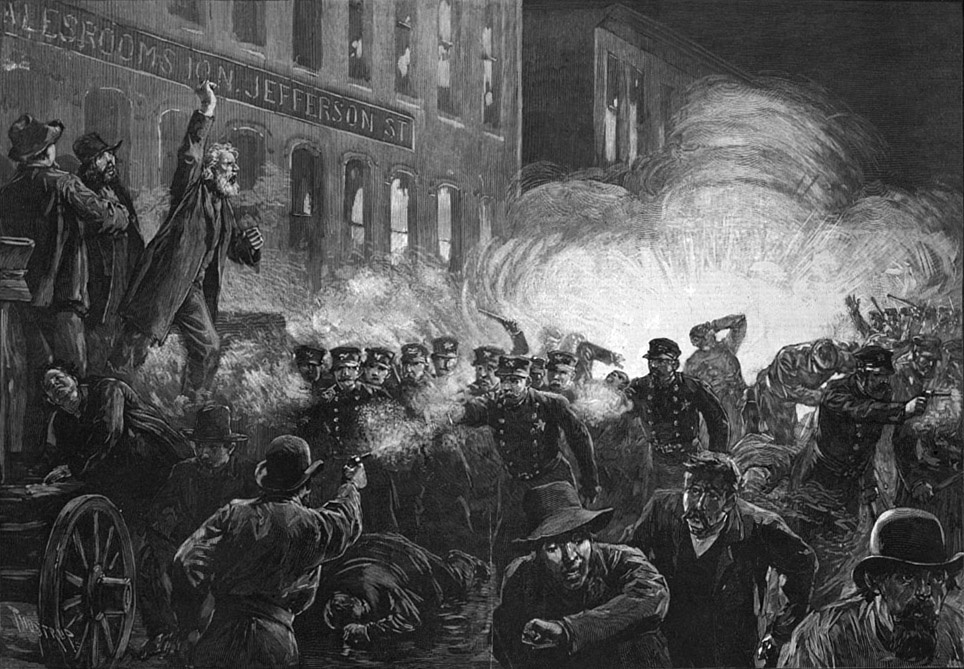
On May 1st, 1886, workers in Chicago launched a citywide strike demanding an eight-hour workday. This bold act of resistance was met with brutal repression. Police opened fire on the demonstrators, killing and injuring several. But the blood spilled did not silence the workers—it ignited a fire across the world.
To honor this heroic struggle, the Second International declared May 1st as International Workers’ Day—a day to commemorate the martyrs of labor and to unite the working class across all borders in their fight against exploitation.
The contradiction between the oppressed and the oppressors is universal. Though it takes different forms in different nations, its essence is the same: the domination of the many by the few. That is why the revolutionary student movement today must raise high the flag of Revolutionary Internationalism. Our task is to act wherever we are, in whatever ways we can, to support anti-oppression struggles around the world.
The Palestinian resistance stands as a shining example of such struggle. Their cause is not just theirs—it is the cause of all the oppressed.
Headline 2
Italy: 80 Years Anniversary of Victory of Anti-Fascist War in Italy

Photo From: Red

Photo From: Red
Eighty years have passed since the Italian people captured and executed Benito Mussolini. That act—collective, political, and without hesitation—was not revenge. It was the conclusion of a period of armed resistance, one rooted in the political maturity of a class that had no illusions about the nature of the state it faced. Mussolini’s death did not end fascism. It marked a moment in a longer struggle—a struggle still unfinished.
Italy is often remembered for producing fascism. Less often is it remembered that the Italian working class was among the first to fight it with weapons in hand, beginning with the Arditi del Popolo in 1921, a formation that predated and surpassed the timidity of the parliamentary left. Throughout the 1940s, workers and militants went underground, joining partisan columns and brigades, often under the leadership of the Communist Party of Italy (PCI), especially in the North.
The Brigate Garibaldi—born out of political necessity—organized sabotage, executed fascist officials, and protected striking factories. In March 1944, workers launched a general strike across Northern Italy. By April 1945, the rising reached its peak: armed partisans entered Milan, Turin, and Genoa. Mussolini, attempting to flee, was captured and killed.
That was not a moment of peace—it was the high point of confrontation between two social orders.
That moment was not carried forward. The political line that prevailed within the PCI—headed by Palmiro Togliatti—was one of national unity, reconstruction, and electoral integration. The brigades were disbanded. The National Liberation Committee was dissolved. Weapons were handed over to the new state. And with that disarmament, both political and military, the space for revolutionary transformation was closed.
Nuova Egemonia notes it directly:
“La direzione del PCI accettò il disarmo delle forze partigiane… in cambio ottenne il reintegro nella legalità borghese.”
“The PCI leadership accepted the disarmament of the partisan forces… in exchange for reintegration into bourgeois legality.”
It was a historical compromise, but one paid for by the class that had risked everything. The new republic preserved the structures of capital and restored authority to many of the same institutions that had supported the fascist regime—now under the supervision of U.S. imperialism. This was not the defeat of fascism as a class structure. It was a shift in management.
In 2025, Italy is once again living under a process of accelerated fascistization. This is not a return to the past. It is the deepening of tendencies that were never eliminated.
As Nuova Egemonia writes:
“Il processo… progredisce in modo accelerato verso la formazione di un regime.”
“The process… is rapidly advancing toward the formation of a regime.”
The consolidation of this regime takes multiple forms:
- A war against the working class, particularly in the South and the Islands, where entire regions are kept in underdevelopment and conditions of semi-feudal exploitation for the benefit of northern monopolies and foreign capital.
- A stripping of labor protections, rising workplace deaths, the criminalization of strikes, and mass unemployment—especially among youth and migrants.
- A repressive expansion of the police and judiciary, targeting dissent, political organization, and social opposition.
- The looting of public funds by parasitic capital, redirecting resources from hospitals and schools to military contracts, real estate speculation, and the bureaucratic machinery of power.
Fascism today does not declare itself openly. It arrives administratively, legally, through judicial decrees and fiscal policy. Its content, however, is unchanged: to discipline labor, eliminate opposition, and prepare for war.
The myth of a “democratic post-war Italy” is finished. What remains is an imperialist state governed by a coalition of traditional right-wing forces, technocrats, and elements of the far-right, increasingly indistinguishable in function and orientation.
As Nuova Egemonia states:
“Lo scontro con il fascismo e l’imperialismo che si profila all’orizzonte è inevitabile e richiede studio, coscienza e organizzazione.”
“The confrontation with fascism and imperialism that looms on the horizon is inevitable and demands study, consciousness, and organization.”
This is not a moral claim. It is a material reality. The historic bloc that rules Italy today is preparing itself for war: both externally, through alignment with NATO and EU rearmament, and internally, through surveillance, austerity, and repression. There is no electoral detour out of this structure. There is no institutional strategy that will restore the gains that have been destroyed.
What is required now is recomposition of the class movement, with ideological clarity and strategic depth. That means rejecting spontaneity, refusing to be absorbed into “popular fronts” with elements of the ruling class, and rebuilding organization with the capacity to confront, not appeal.
It is not the memory of the Resistance that matters—but its continuation. That means fighting to resume what Nuova Egemonia calls “il Cammino interrotto della rivoluzione proletaria” — the interrupted path of proletarian revolution.
This is not a call for symbolic politics. It is a strategic orientation, based on material analysis and historical continuity.
Resources: https://x.com/redstreamnet/status/1915722148234121284
https://nuovaegemonia.com/2025/04/21/25-aprile-riprendiamo-il-cammino/
Headline 3
Vietnam: 50 Years Since the Defeat of U.S. Imperialism — A Victory of the People, A Betrayal by the Party

On April 30th, 2025, we mark 50 years since the Vietnamese people defeated the U.S. invasion and overthrew the imperialist puppet regime in the South. This was not a negotiated handover—it was the result of decades of people’s war, rooted in the countryside, carried out by peasants and workers, led by armed revolutionary forces, and supported by militant struggles around the world, especially the student movement in the United States.
But what began as a war of national and class liberation did not end that way. Though the U.S. was defeated, and though the people sacrificed everything, the Communist Party of Vietnam ultimately failed to carry the revolution through. It abandoned the path of class struggle, integrated itself into the global capitalist order, and became a new pillar of repression—no longer serving the workers and peasants, but managing them on behalf of capital.
Still, the Vietnamese people’s victory in 1975 remains one of the most important achievements in the global struggle against imperialism. It offers lessons not only in warfare, but in political line, strategy, and the dangers of betrayal.
Throughout the anti-colonial war, the Vietnamese revolutionaries often participated in negotiations, such as the 1954 Geneva Accords, but they never relied on diplomacy to win. As later events proved, the Geneva Accords secured revolutionary base areas in the North, but at the cost of dissolving much of the armed and political infrastructure in the South. This opened the door to brutal repression and gave the U.S. the pretext to expand its military presence.
The lesson: legal struggle can be tactically useful—but only if subordinated to the strategic goal of building people’s power. When legal compromise takes precedence over class struggle, the result is defeat.
The United States did not leave Vietnam because of treaties. It left because it was beaten militarily and politically—through the coordinated action of millions in Vietnam and mass opposition in the U.S., especially among students and Black and working-class communities.
The most painful lesson of Vietnam is not just how victory was achieved—but how it was later undone.
After 1975, the Communist Party of Vietnam failed to carry forward the class struggle. It entered a phase of reconstruction without revolution, choosing integration into the global market over socialist construction. Today, the state of Vietnam protects foreign capital, displaces peasants, represses workers, and criminalizes dissent.
This is not accidental. It is the consequence of abandoning revolutionary principles—principles that must anchor every organizing effort:
- Serve the people, not your career.
- Build mass struggle, not compromise with power.
- Stay rooted in labor and the oppressed—not in elite circles or institutions.
Today, in Palestine, in the streets of U.S. campuses, in workers’ struggles, we see signs of that same political clarity returning. But we must not repeat the mistakes of the past. The purpose of organization is not survival—it is to win. And to win, we must fight.
Fifty years later, the state of Vietnam no longer represents the cause of the workers, peasants, and revolutionaries who fought that war. But the spirit of 1975 lives on—not in the government, but in the memory of victory won through people’s war, and in the example of a small, semi-colonial nation defeating the largest imperialist army in the world.
That victory belongs to the masses. It is not over. Its meaning is not finished.
We must carry forward the strategic clarity of the Vietnamese people’s war, and refuse to follow those who will walk us into compromise, disarmament, or defeat. The world system the U.S. tried to defend in Vietnam is in crisis once again. The contradictions are sharpening. We must organize accordingly.
SELECTED MAY DAY CELEBRATIONS FROM AROUND THE WORLD.
Turkey: Despite severe repression, the people of Turkey marked May Day with militant spirit. Celebrations erupted in cities such as Tarsus and İzmir, with mass participation in defiance of state bans. In response, the Turkish government arrested over 400 protesters, and 13 individuals have been charged in connection with May Day actions

Photo from: Yeni Demokrasi
Brazil: Across the country, students and workers mobilized in powerful protests against rising police violence. Actions were organized by the Fórum Unidade na Luta (Unity in Struggle Forum) and joined by revolutionary organizations including the Movimento Feminino Popular (MFP) and Movimento Estudantil Popular Revolucionário (MEPR). In the North, the Amazonas Executive of Pedagogy Students (ExAmEPe) marched in defense of education and people’s rights. United in the streets, the masses raised their voices against state repression and imperialist plunder.

Photo from: A Nova Democracia
Resources:https://anovademocracia.com.br/trabalhadores-estudantes-fileiras-1-maio/
France: On May 1, 2025, France witnessed widespread May Day demonstrations, with approximately 300,000 individuals rallying across the nation. This marked an increase from the previous year, though it remained below the peak turnout of 2.3 million in 2023 during the pension reform protests. The events were characterized by a strong anti-capitalist and internationalist sentiment, with significant participation from youth and revolutionary groups.
In Paris, tensions escalated when protesters confronted a delegation from the Socialist Party (PS), leading to the delegation’s removal from the march and subsequent arrests. This incident underscored growing dissatisfaction with perceived political opportunism.
Other cities saw robust turnouts:
- Toulouse: 10,000 marched, predominantly behind a CGT-led contingent emphasizing class struggle.
- Limoges: 2,000 participants, including a revolutionary bloc of unions, youth, and political organizations.
- Marseille: Thousands rallied, with the CGT expressing solidarity with imprisoned revolutionary Georges Ibrahim Abdallah.
Post-march activities included community events like barbecues and political discussions, notably in Toulouse’s Mirail district. Demonstrations also highlighted international solidarity, supporting causes such as Palestinian rights and indigenous struggles.


For a detailed account, refer to the full report by La Cause du Peuple.

 Revolutionary Student Union
Leave a comment