
Introducing the first edition of the Revolutionary Student Union’s Weekly News Bulletin! Every Monday, we bring you weekly updates on national and international news that matter to students and workers everywhere. From protests and strikes to education issues and global movements for justice, we cover the stories that mainstream capitalist media often ignores and brushes over. Our goal is to keep you informed, inspired, and ready to take action. Whether you’re new to the struggle or a longtime organizer, we’re glad you’re here, let’s build power together!
CHAPTER ACTION SPOTLIGHT OF THE WEEK.
On March 27, the Central New Jersey Revolutionary Youth disrupted a panel discussion at Princeton University featuring congressional representatives Terri Sewell, Brendan Boyle, Leonard Lance, and John Sarbanes. The activists confronted the speakers to protest their pro-Israel stances and to advocate for Palestinian rights. This direct action underscores our continued commitment in challenging representatives of U.S imperialism and their support for zionist colonialism.
NATIONAL NEWS

Farmworker activist and union leader Alfredo Juarez Zeferino, known as “Lelo,” was unjustly detained by ICE on March 25 while driving his partner to work in Sedro-Woolley, Washington. ICE agents reportedly broke his car window during the arrest, despite Juarez having no criminal record. This action appears to target his leadership in advocating for farmworker rights, highlighting a troubling pattern of intimidation against community organizers. We must unite to oppose such oppressive tactics and demand the immediate release of Alfredo Juarez and others unjustly detained by ICE. Organizing against these injustices is crucial to protect the rights of activists and immigrant communities nationwide.
Masked ICE agents detained Turkish doctoral student Rumeysa Ozturk near her home in Somerville, Massachusetts, on March 25, in what is being called a politically motivated act of repression. Ozturk, a student at Tufts University, was reportedly blacklisted for her pro-Palestinian views and advocacy on campus. This outrageous act happening under the Trump presidency’s crackdown on dissent—signals a dangerous escalation in the targeting of international students, especially those who speak out against U.S. and Israeli policy. We must not stay silent. Students across the country must organize now to demand her release, reject ICE’s intimidation tactics, and build a mass movement to defend academic freedom and immigrant rights.
A Guatemalan mother and her children were detained for five days by U.S. border agents after accidentally making a wrong turn near the Canadian border. This heartbreaking incident shows how easily migrant working women and their families can become victims of a cruel and unforgiving immigration system. Their detention highlights the daily fear and uncertainty faced by immigrant mothers simply trying to survive and care for their children. We must come together and organize against ICE and the broader system of detention and deportation.
The University of Michigan has shut down its Diversity, Equity, and Inclusion programs under pressure from the Trump administration directly targeting the progress made by Black, working-class, and first-generation students. This move is not just a budget decision it’s a political attack meant to erase hard-won gains and silence oppressed voices on campus. We must organize, resist, and defend the right of oppressed people to study, speak, and struggle. DEI may be gone—but the fight is not. Check out our Michigan chapter’s brief analysis of the situation here.
Hundreds of international students across the U.S. are receiving emails from the State Department ordering them to self-deport due to alleged involvement in campus activism or even for sharing social media posts supporting Palestinian rights. This crackdown is not limited to physical participation in protests; students are being targeted for merely liking or sharing posts deemed “anti-national.” These actions are part of a broader, oppressive strategy to silence dissent and intimidate international students who stand for justice and equality. We must unite and resist these unjust measures. Organize on campuses, build solidarity networks, and demand an end to the targeting of students for exercising their right to free expression. An attack on one is an attack on all. Stand together to protect our communities and our rights.
In a troubling escalation of state surveillance, Clearview AI, the company notorious for building a vast facial recognition database by scraping billions of images without consent, has deepened its ties with U.S. law enforcement and immigration agencies under new leadership. Following the resignation of CEO Hoan Ton-That in early 2025, far-right investor Hal Lambert, a Trump ally, stepped in to steer the company toward even more aggressive expansion. Despite mounting legal challenges and privacy concerns, Clearview is poised to triple its revenue by partnering with ICE, the FBI, and local police, fueling a future where biometric tracking becomes a central pillar of government control.
In a move raising alarm among students and faculty, at least eight international students at Arizona State University have had their visas suddenly revoked, with little explanation provided. Many of the students were blindsided, some learning of the revocation only while trying to re-enter the U.S. The vague and inconsistent reasoning ranging from academic concerns to undisclosed national security flags, highlights the growing precarity faced by international students. As federal scrutiny intensifies, communities are being called to stand in solidarity and demand transparency in the systems that shape academic and immigrant lives.
In another display of political repression, federal authorities have revoked the visas of six Stanford students and recent graduates, many of whom were vocal in pro-Palestinian organizing. No charges, no transparency, just swift, silent punishment.
THE AMERICAS

In late March 2025, peasants organized by the League of Poor Peasants (LCP) in Machadinho do Oeste, Rondônia, Brazil, successfully repelled an attack by armed goons from the Invasão Zero group, resulting in injuries to two peasants. The 120 families residing in the Gedeon José Duque Camp fear further assaults, as the disputed land comprises public farms allegedly usurped by large landowners. In a separate incident on March 19 and 20, goons serving a local landlord set fire to crops in Engenho Barro Branco, Jaqueira, Pernambuco. The residents managed to extinguish the fires and vowed to resist intimidation, asserting their determination to defend their land rights.
March 28 is celebrated as the Day of the Combatant Student in Brazil, honoring Edson Luís, a student killed by police during a protest against the military dictatorship in 1968. The article from Unidade Vermelha – Liga da Juventude Revolucionária (UV-LJR) commemorates this date by sharing a poster to remember Edson Luís and highlight the ongoing struggle of students against oppression. The UV-LJR encourages reflection on the history of student activism and the importance of continuing the fight for democratic rights and social justice.

In March 2025, Brazilian students actively protested for various causes. In São Luís, students and workers demanded the implementation of a free student transportation pass, approved by a previous plebiscite but not yet enacted. At the University of Brasília, over 400 students and professors rallied against right-wing extremists attempting to disrupt academic freedom. Additionally, at the Federal University of Rondônia, democratic newspapers were distributed, emphasizing the importance of supporting peasant and Indigenous struggles.
In early March 2025, the organization Red Sun Mexico initiated the “Day of Struggle in Defense of the People’s Rights, Justice, and Freedom” in Oaxaca City. The event honored disappeared, imprisoned, and fallen comrades, beginning with a large gathering on March 3 at the Santa Rosa Zonal Market, where community members protested against the imposition of authorities by political parties. Participants from various regions marched through Oaxaca City, chanting slogans and displaying red flags to demonstrate solidarity and resistance. On March 4, they held a rally at the “El Llano” park, featuring speeches and cultural performances that emphasized the ongoing struggle for justice and the importance of unity among the working class, indigenous peoples, women, and youth. This mobilization marked the start of a series of actions planned to continue until May, commemorating the seventh anniversary of the forced disappearance of Dr. Ernesto Sernas García.
In the wake of U.S. President Donald Trump’s renewed interest in acquiring Greenland, the island’s recent parliamentary elections have garnered significant international attention. The pro-business Demokraatit party, advocating for a gradual approach to independence from Denmark, secured 29.9% of the vote, marking a substantial increase from previous elections. Naleraq, a party favoring rapid independence, followed with 24.5%. These results reflect Greenlanders’ desire to assert self-determination amidst external pressures. Trump’s expressed intentions have intensified geopolitical interest in Greenland, given its strategic Arctic location and abundant natural resources. The election outcome underscores the island’s complex position between major powers and its pursuit of an independent path forward.
ASIA
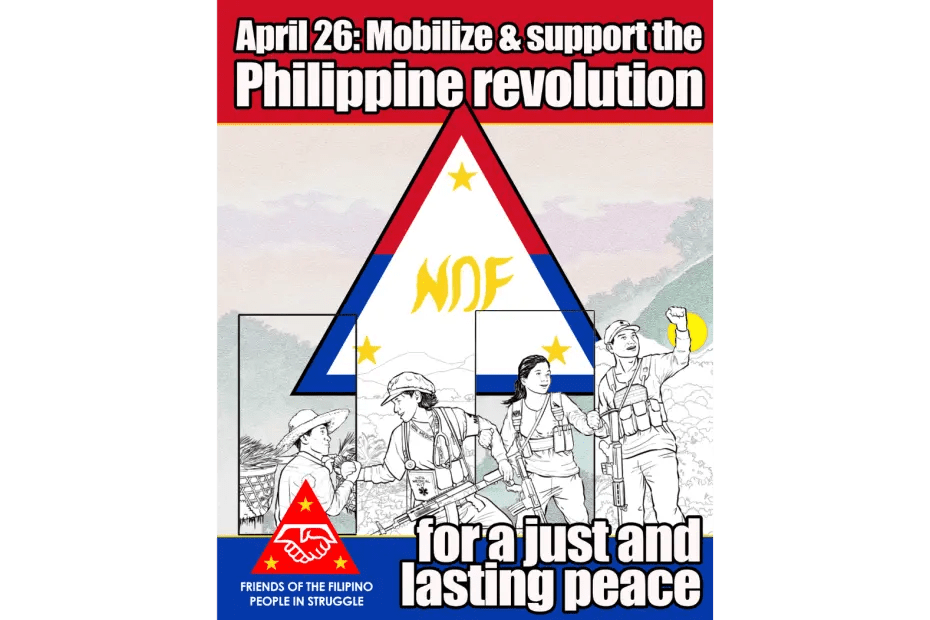
The Friends of the Filipino People in Struggle (FFPS) have announced globally coordinated mass actions on April 26, 2025, at 5 PM local time, to support the Filipino people’s revolutionary struggle for a just and lasting peace. This initiative coincides with the 52nd anniversary of the National Democratic Front of the Philippines (NDFP) on April 24. The mobilizations aim to highlight the NDFP’s role in advocating for national and social liberation, contrasting it with the US-led NATO’s militarization in the Asia-Pacific region, particularly in the Philippines. The FFPS criticizes the Philippine government’s increased military cooperation with the US and other NATO countries, including the expansion of US military bases and joint military exercises like Balikatan 2025, warning that such actions may entangle the Philippines in broader imperialist conflicts. The FFPS calls for international solidarity to oppose imperialist aggression and support the Filipino people’s pursuit of genuine democracy and peace.
On March 25, 2025, three people identified by police as Maoist rebels were killed in a gunfight with Indian security forces in the forested border area between Dantewada and Bijapur districts in Chhattisgarh, India. Among those killed was a senior Maoist leader who had a large reward on his head, and the operation was part of ongoing efforts by specialized units like the District Reserve Guard to combat the long-running Maoist insurgency in the region, which has seen frequent violent clashes over land, resources, and tribal rights.
The National Democratic Front of the Philippines (NDFP) has issued a statement regarding the upcoming visit of U.S. Defense Secretary Pete Hegseth to the Philippines. The NDFP criticizes this visit, viewing it as a continuation of U.S. intervention in Philippine affairs and a reinforcement of U.S. military influence in the region. They argue that such visits undermine Philippine sovereignty and contribute to ongoing conflicts within the country. The NDFP calls on the Filipino people to oppose foreign military presence and to strive for genuine national independence.
The New People’s Army (NPA) celebrated its 56th anniversary on March 29, 2025. The Communist Party of the Philippines (CPP) praised the NPA’s dedication and urged them to continue their revolutionary efforts. Despite these calls, the Philippine Army reported no significant incidents during the anniversary. The CPP acknowledged past losses but encouraged the NPA to launch tactical offensives and strengthen ties with local communities.
In late February 2025, the New People’s Army (NPA) in West Camarines Sur repelled attacks from the Philippine Army’s 81st and 16th Infantry Battalions in Ragay town, resulting in at least 11 soldiers killed and seven wounded. The encounters occurred on February 23 in Barangay Baya and on February 24 in Ragay. Following these clashes, the Armed Forces of the Philippines (AFP) launched a large-scale operation involving helicopters that allegedly conducted indiscriminate strafing, impacting local livelihoods. The NPA reported the loss of one of their fighters, Angelo “Ka Kim” San Diego, during these battles. They also defended their use of command-detonated explosives as compliant with international humanitarian law, while accusing the AFP of multiple violations affecting local residents.
The International Committee to Support the People’s War in India (ICSPWI) has issued a statement calling for increased support for the People’s War led by the Communist Party of India (Maoist) [CPI (Maoist)] during the International Week of Solidarity from April 7 to 12, 2025. The ICSPWI criticizes the Modi government’s policies, highlighting its focus on militarization and the promotion of Hindutva ideology, which they argue suppresses religious minorities and democratic dissent. They also point to India’s economic growth and its aspirations to become a regional power aligned with U.S. interests, while noting internal conflicts and independence movements in various states. The committee urges international solidarity with the CPI (Maoist) and the People’s War in India during this designated week.
The Yemeni Armed Forces (YAF) announced they had launched ballistic missiles targeting Israel’s Ben Gurion Airport, causing air traffic disruptions. Additionally, the YAF claimed to have engaged U.S. warships, including the USS Harry S. Truman, in the Red Sea using drones and missiles. These actions were framed as responses to U.S. and Israeli military operations in the region. The U.S. military reported intercepting several Houthi drones prior to these claims.
In March 2025, Turkey witnessed significant unrest following the arrest of Istanbul Mayor Ekrem İmamoğlu on corruption and terrorism-related charges, viewed by many as politically motivated. This led to nationwide protests, with hundreds of thousands rallying in major cities like Istanbul, Ankara, and İzmir, demanding İmamoğlu’s release and expressing opposition to President Recep Tayyip Erdoğan’s administration. The government responded with a substantial crackdown, detaining nearly 1,900 individuals, including journalists and students, and implementing measures such as restricting public gatherings and limiting access to social media platforms. Organizations like Partizan, which promote the democratic rights of the Turkish people have been repressed and faced violence throughout the protests. These events have raised international concerns regarding democratic practices and human rights in Turkey.
In Indonesia, President Prabowo Subianto’s administration has introduced significant austerity measures, including budget cuts totaling $44 billion, affecting education, health, and infrastructure sectors. These cuts have led to widespread student protests across major cities, with demonstrators expressing concerns over increased university fees, reduced scholarships, and declining educational quality. The government’s efforts to fund a free meal program for schoolchildren and pregnant mothers have been met with criticism, as many argue that essential public services are being compromised. Authorities have responded to the protests with measures such as tear gas and water cannons, resulting in arrests and escalating tensions nationwide.
Hamas has accepted a ceasefire proposal mediated by Egypt and Qatar, agreeing to release five hostages, including American-Israeli soldier Edan Alexander, in exchange for a 50-day cessation of hostilities during Eid al-Fitr and Passover, the release of Palestinian prisoners, and the entry of humanitarian aid into Gaza. Israel has responded with a counter-proposal, coordinated with the United States, seeking the release of 10 to 12 hostages. Prime Minister Benjamin Netanyahu emphasized that military operations will continue until all hostages are freed. These developments come amid the ongoing genocide in Gaza, resulting in significant casualties and destruction.
EUROPE

In Greece, authorities are attempting to dismiss Chrysa Chotzogloy, a dedicated educator and activist. Chotzogloy has been actively involved in advocating for teachers’ and students’ rights, participating in protests and demonstrations. Her potential dismissal is viewed by supporters as a politically motivated action aimed at silencing dissent within the education sector. This situation has sparked concern among educators and activists, who see it as an attack on the right to protest and organize. Supporters are calling for solidarity to prevent her dismissal and to uphold democratic rights in the workplace.
AFRICA

France has initiated its withdrawal from Senegal by handing over two military bases, marking a step forward in the ongoing struggle against semi-colonial and semi-feudal domination in West Africa. This foreign military presence has long propped up reactionary regimes and suppressed the masses’ aspirations for sovereignty and genuine liberation. The withdrawal reflects growing resistance to imperialism and signals a potential advance in the broader movement for a New Democratic revolution—one that aims to unite workers, peasants, students, and progressive forces in the fight for national independence, agrarian revolution, and new democracy.
Renewed fighting has erupted in eastern DRC between the Rwanda-backed M23 rebels and pro-government Wazalendo militias, with clashes reported in North and South Kivu, including near Lake Edward and north of Bukavu. This violence, rooted in the imperialist plunder of Congo’s vast mineral wealth, continues despite mediation attempts by regional blocs like the EAC and SADC. On Monday, five former heads of state were appointed to revive peace talks, but M23 leader Corneille Nangaa rejected the process, criticizing his group’s exclusion. The war has killed thousands, displaced hundreds of thousands, and deepened the region’s humanitarian crisis.
A catastrophic toxic spill from a Chinese-owned copper mine in Zambia has polluted the Kafue River, one of the country’s most important waterways, cutting off water to the city of Kitwe and devastating local ecosystems and farms. Over 50 million liters of acidic waste leaked from the Sino-Metals Leach Zambia facility, killing fish, birds, and destroying crops along a 100-kilometer stretch of the river. This disaster highlights the growing concerns over China’s exploitative role in Africa, where profit-driven operations often ignore environmental and labor standards. Chinese companies extract wealth while leaving behind destruction and crisis for working people.

 Revolutionary Student Union
Leave a comment