
Introduction by RSU
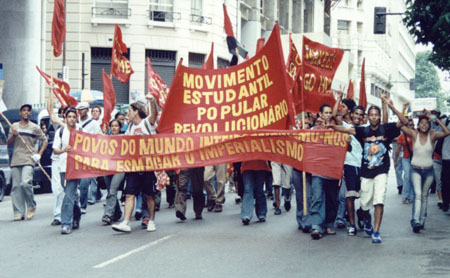
The Revolutionary Student Union (RSU) hereby republishes this article from the Brazilian People’s Revolutionary Student Movement (MEPR) initially published in 2005. The MEPR is a student organization in service of the people of Brazil, they strive for the alliance of workers-peasants and students. They are a truly progressive organization fighting for the transformation of Brazil. The RSU stands with the MEPR against the ongoing repression they’re facing at the hands of the Brazilian government, led by the fake opportunist “socialist” Lula Da Silva. The MEPR has also participated in recent student occupations in Brazil in support of the Palestinian resistance, the most recent example being the occupation of the State University of Rio de Janeiro (UERJ). You can learn more about the MEPR and the people’s movement Brazil at the MEPR website and the newspaper A New Democracy.
This article contains numerous footnotes to further explain the content and context of the piece, if you have any questions, feel free to email us.
LET’S TEAR DOWN THE UNIVERSITY’S WALLS (2005)
Let’s dare to create chaos in the old ideas and make the university a great
laboratory of science in service of the people and Revolution.
— People’s Revolutionary Student Movement (Brazil)
“Who explains the political, economic and social problems of contemporary
society? Who comments on modern revolutionary, reactionary or reformist
political literature? Our professors seem to be living on the fringes, out of
touch, out of touch with reality, they seem to be living on the fringes of the
new times. They seem to ignore the thinkers, theoreticians and critics of these new times. Perhaps some think they are more or less well-informed, more or less well-informed. But in this case, research does not arouse their concern. In this case, world news leaves them indifferent. In this case, young people always have the right to accuse them of insensitivity and impermeability. (…)
Professors are concerned solely and exclusively with the bibliography of their course. Their mental flight generally does not go beyond the routine scope of their professorship. They are all definite conservatives or potential
conservatives, latent reactionaries, who in domestic politics sigh impotently
and nostalgically for the old order of things. Mediocre lawyer’s mentalities,
generated in the ideological offsprings of civilism; bureaucratic
temperaments, without wings or vertebrae, organically small, cowardly
accommodating, middle-class in character, vulgar, old-fashioned, limited and
sterile, without great ideals, forged for the bourgeois horizon of a
representative of a supreme court, a diplomat or a high advisory position in a
profitable capitalist company. These intellectuals with no real ideological
affiliation, lovers of aristocratic tendencies and elite doctrines, concerned with tiny reforms and diminutive bureaucratic ideals, bear the stigma of
mediocrity. Alongside these negative people, with a phobia of the people, a
phobia of the crowd, maniacal with aestheticism and decadentism, confined to the written study of past ideas, young people feel orphaned of teachers and orphaned of ideas.”
— “Crisis of Teachers and Crisis of Ideas,” Published in Clarity [Claridad],
1919; José Carlos Mariátegui, Peruvian Revolutionary
Universities in our country have been suffering from a major illness: a lack of enthusiasm, boldness and, an age-old conformism. Most students go to university just to attend classes and hand in assignments. The curriculum doesn’t excite, they don’t provoke debate or new questions and criticisms. The anxious freshmen, on their very first days, are very disappointed when they attend classes and compare them with all the promises in the pretty candidate handbooks. All their youthful vitality in learning new things falls by the wayside.
We believed that when we went to university, we would be able to answer humanity’s great questions and have new tools to understand today’s pressing issues. Understanding world conflicts, taking a scientific stance on cloning, religions, unemployment, the economy, nuclear energy, international rights and so many other issues that permeate the world today; but instead, we are presented with a dull, lifeless curriculum, tied to the institutionality of contracts with companies or the vanity of one or another respected professor with a doctorate in this or that specialty, which is of no interest or use to the major problems facing society and our country. The opposite of this is rare.
You can see this as soon as you talk to a third or fourth term student. Many are unsure whether they want to continue with the course and when they do, they want to finish their subjects and rush off to graduation. Others jump from course to course in the hope of finding some stimulus to continue studying.
But the crisis is not just one of teachers and ideas, but an institutional one, in that our universities are becoming subsidiaries of multinational (corporations) and are literally being privatized1. We are forced to pay more and more fees at public universities as a way for the government to ease the burden on the state’s education budget. Meanwhile, private universities are being blatantly robbed by these businessmen politicians who, through abusive tuition fees, have turned education into a big business where they make millions.
Autonomy and Democracy versus Commodification of Education
The general crisis of capitalism, which began in the 1980s, led to a worldwide restructuring of the model of capitalist accumulation that had been in force since the World War 2. This new restructuring, dubbed “neoliberalism,” removes a large part of the state’s initiative and economic role, transforming public services, such as education and health, into profitable commodities, included in the market circuit. The commodification of education implies introducing this service into the market system, transforming technical schools and universities, in particular, into capitalist companies, with their entire system of competition, cost assessment, profitability and priority setting. The social objectives and results of education are relegated to last place, with economic objectives and results taking priority.
In these conditions of control of knowledge by the capitalist monopolies, fundamental issues such as democracy and autonomy are no more than talk and far from being practiced. Starting with political and academic decisions, where the majority of students, teachers and staff don’t take part in any of the decisions. The councils, departments, collegiate bodies and congregations are controlled by appointees from the directorates and rectorates chosen by the triple list system. You see, we know that the electoral process in our country is a farce, but at least they disguise it more when the person occupying the position is the one who got the most votes. In the case of the elections for rectors and heads of federal public schools and universities, the demagoguery is ridiculous when they talk about democracy and autonomy, because it is the president of the republic and the minister of education who choose the head of the university. And then they say it’s an exaggeration when they say that the university is still living under the colonial empire.
We don’t have any say in the curriculum of university courses either. All this is decided by the bureaucratic bodies that dominate the university. When the curriculum is questioned and there is talk of reform, it is only to adapt it to the “new needs of competition in the job market.” We can never have a say, not even to evaluate the course, the curriculum and the teachers. This is the job of the Ministry of Education, which, through evaluation methods such as the “provão” [“big test”— Trans.] (under the false allegation that it serves to improve the quality of teaching), only checks that the plans of the big monopolies are being applied and giving results. The same happens with research, which is also directed according to the interests of the monopolies, and it is rare that we manage to develop it without this type of interest. When we do, there is no funding for projects that aim to improve people’s lives; only those that make a lot of profit receive funding. All the space for great debates and discussions, for scientific innovations or the search for new techniques or theories, is filled by cold disciplines to better train us for the job market.
The University has Become an Island, Distant from
the Reality of the People
Since US imperialism 2launched its grotesque “end of history3” propaganda, the direction of classes has become more pronounced, with classes being reduced to specific debates on small bits of knowledge. They are gradually moving away from the great debates of our time. Laboratories produce research that is disconnected from social interest, from the problems of our people, and sink into the specifics of their specialized disciplines. Courses such as medicine, engineering, biochemistry, dentistry and pedagogy do not focus on research into the problems that affect the majority of the population. Extensivist 4doctors (who study and practice general medicine) are seen as not important, because what matters are highly specialized professionals trained to use cutting-edge technology for the few. Tropical diseases, problems such as malnutrition and diarrhea continue to kill millions of children without deserving attention because they are not profitable. Research in the field of biochemistry serves the drug industry, which is concerned with its royalties and maximum profit, without the slightest concern for the vast majority who die without treatment because they cannot afford it. Engineering shies away from discussing techniques to make building materials cheaper, for example, while it hastily turns its attention to robotics. The vast majority of the population continues to have their teeth pulled out as the only form of treatment, while the most sophisticated implant techniques are being developed. Future educational professionals, in Pedagogy courses, learn how to train students to fulfill the orders of the big capitalist companies.
The university is raising the walls that separate it from society in the growing process of privatization. It distances itself from the tensions we are experiencing in our time. It pretends not to see the class struggle, let alone the poor people of our country. The classrooms look like gloomy mausoleums, with no heat, no disputes, no light. When there are debates, they are based on disputes over the status or elections of the departmental bureaucracy, a circus of vanity and empty speeches. The cult of non-interaction in reality proliferates, of cultivating political inertia. One of the most widespread ideas is conformist relativism, that nothing is worthwhile, that there is nothing we can do, and that it is better to say nothing.
In order to comply with the plans to control knowledge, the bourgeois model of education is imposed, with curricula that develop empirical and fragmented knowledge, where specialization is disconnected from the reality of the world. Following this route defined by imperialist plans for the dominated countries, it is “natural” that political inertia and uncritical and conformist students are produced and encouraged.
In order to apply this capitalist policy in education, it is necessary to have professional staff who defend it and formulate it with the air of theory. This is why so many university doctors attack Marxism5, either blatantly or subtly, because they know that it is Marxism that provides the answer to the transformative will of young people who want to study to serve the people and not to conform to this reality; it is Marxism that affirms that knowledge is only produced in conjunction with the transformation of society. That’s why they invest heavily from the first term onwards to remove from students’ minds any curiosity, if not sympathy, that the vast majority have for Marxism.
The university needs to break down its walls, to polarize on the issues that
afflict our people, our society.
Opportunism Serves this Reactionary University
The application of the new capitalist restructuring to the educational process has led to a conscious move towards depoliticization. The faculties of the so-called human sciences, which were once the headquarters of the revolutionary student struggle at the end of the 1960s, are now dominated by authors who defend the anti-scientific thesis of the “end of history” and that, therefore, any kind of radical and profound transformation in our society is impossible, denying antagonism and the class struggle, not taking sides in relation to the conflicts taking place in the world.
The application of imperialist policy on the social, economic, political and ideological levels to society as a whole led to a temporary strengthening of the opportunists6’ actions. On the political level, imperialism was interested in replacing the military regimes with elected governments, all without changing anything in essence, just to contain the popular resistance that was growing again at the end of the 1980s. The implementation of this policy assigned a prominent role to opportunism, which, emerging from within the people’s movement, began to control the social movements, chortling at the demagogic propaganda that democracy had finally been won. Legitimizing the electoral farce, the opportunists say that there is no need to radicalize the struggle anymore, that now you just have to vote for the best candidate and all the problems will be solved because the people have regained the right to vote and can express themselves “without repression” inside and outside the universities. Now, if the repression had weakened, then it was time to radicalize more, taking advantage of the weakening situation of fascism in the Brazilian state so that the revolutionary people’s movement could accumulate forces for a deep and real transformation, the revolution in our country
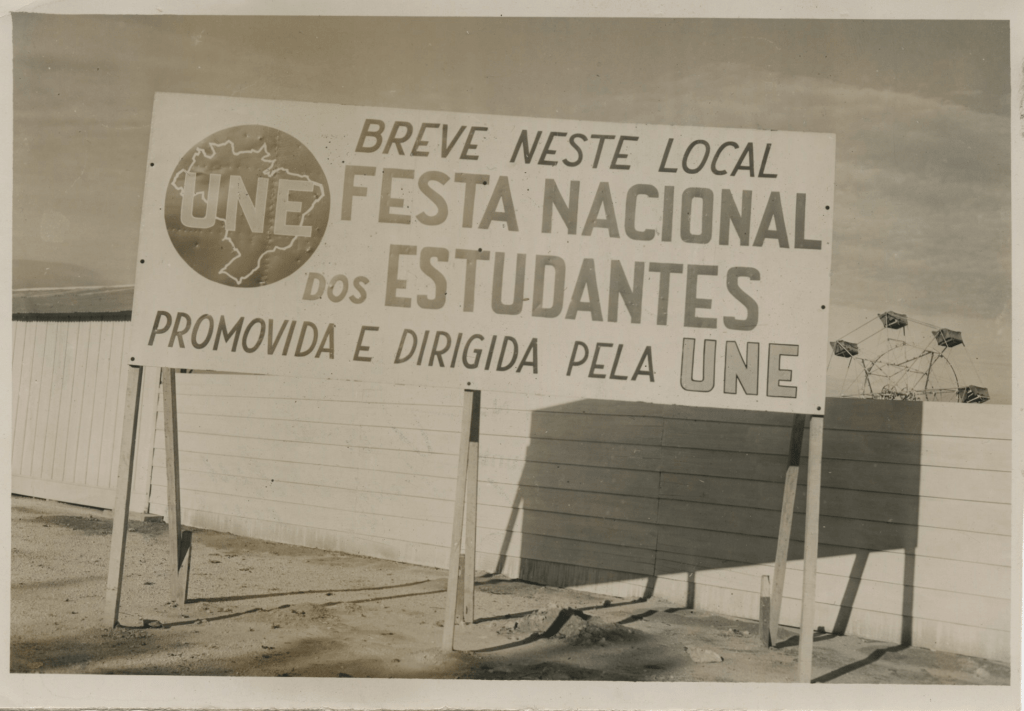
From then on, immobility, paralysis and apathy reigned at the university. The National Union of Students (UNE), now preoccupied with painting its face, dropping its pants, organizing civic campaigns sponsored by the Globo network7 and throwing parties to elect its candidates, parasitized the university and tried to stifle the rebellious spirit by disorganizing the student struggle. The pinnacle of this party promoted by the opportunists was “Fora Collor,” [Collor Out!, Fernando Collor was the president of Brazil from 1990 to 1992—Trans.] a movement created by the media as a result of the need of the bourgeoisie, the latifundia (Rural landlord class) and imperialism to change the manager on duty of the Brazilian state, Collor de Melo, because his shameless theft demoralized the project of the ruling classes. That organized and combative 8movement of the 1960s and 1970s (see the section regarding 1968) has been replaced by a fad, a festive style that, deep down, doesn’t shake an inch of the structure of the Brazilian ruling classes. The opportunistic actions of the UNE diverted the students’ struggle towards movements to wear down leaders by channeling them into electoral projects rather than fighting to transform the system. This facilitated the action of the reactionary state, which through its governments, such as that of FHC [Fernando Henrique Cardoso, president of Brazil from 1995 to 2003—Trans.] from his first term as Collor/Itamar’s successor to the present day, implemented its plans to dismantle public education, privatizing universities little by little, placing them under the control of the big monopolies.
The New Student Movement, Popular and Revolutionary
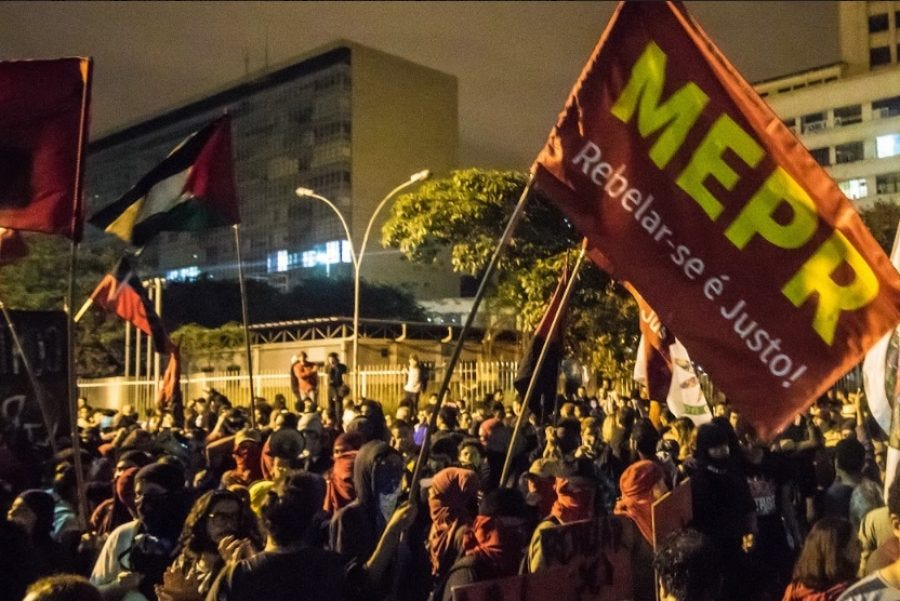
The moments of revolutionary passion experienced by students in the 1960s and 1970s were the result of their rebellious and nonconformist stance, opposed to the proposals of opportunism in the student movement and in academic life itself. The policy imposed by imperialism, far from representing an unshakeable force, shows every day, all over the world, its exhaustion, its immense difficulty of application. People in all oppressed countries are resisting and fighting, and in order for us students to add our strength to this resistance, it is necessary to build and develop a genuine revolutionary, combative and rebellious student movement that serves the people and the construction of people power in our country; that frees the university from the prison of capital 9in order to produce true science. This is what we are organizing for as historians, doctors, educators and agricultural scientists of the people. To act effectively in the class struggle and thus learn, in revolutionary social practice, how to develop science, fused with those who have the capacity to transform this world: the classes exploited by capitalism.
The Student Movement in 1968
The great heyday of the student movement in the 1960s and 1970s was an expression of the class struggle that was intensifying with the general crisis of the capitalist system, expressed in radicalized anti-imperialist struggles, in the wars of liberation of the peoples of the world against the Yankees10 and other powers, as was the case in Vietnam, Cuba, and North Korea. 1968 was a year marked by intense student mobilization in Brazil, Latin America, and around the world. Students took part in the armed struggle that was developing in dozens of countries. This was greatly influenced by the advances of socialism, particularly with the great Proletarian Cultural Revolution in China that began in 1966.
In Brazil, the increase in hunger and unemployment, the radicalization of the peasant movement and the urban struggles were causing concern in the student movement. University campuses were the scene of great political unrest, linking the students’ struggle to the struggle of the whole people. Despite the state measures to control universities according to imperialist interests, fighting against the violent repressive apparatus of the fascist 11military regime, the students actively participated in the class struggle, not letting a single event in Brazil and the world go by without expressing themselves. Many young people left schools and universities and joined the armed struggle.
This combativeness was the fruit of sharp political and ideological debate between the revolutionary currents, which, even though they were hegemonized by petty-bourgeois12 conceptions, were in the camp of the struggle against dictatorship (Brazil was under a military dictatorship from 1964-1985) and imperialism. No advance by US imperialism was carried out without burning Yankee flags. No clause of the MEC-US Agency for International Development (USAID) agreement was implemented at the university without a lot of resistance, political strikes, stoppages and so on.
But we must understand that, for all its combativeness, in general the student movement in Brazil expressed the discontent of the middle classes oppressed by the military dictatorship and, in its radicalization, did not manage to go beyond petty-bourgeois radicalism. Limited by this conception, it did not merge deeply with the masses of workers and peasants, and ended up being defeated by the dictatorship.
- Privatization refers to the handing over of government owned properties/institutions to corporations aka private interests. ↩︎
- US imperialism is the number one enemy of the people of the world. Imperialism also refers to the type of capitalism we have in the US, our article here, goes into more detail about US imperialism and capitalism. ↩︎
- The theory of the end of history was coined by American Political “Philosopher” and US State Department operative Francis Fukuyama in a book of the same name which claimed that the fall of the USSR represented the final victory of Capitalism in the worldwide struggle of different ruling systems. However, history has shown this to not be the case. Fukuyama’s thesis is easily refuted by the continuous and advancing struggles of the masses of the oppressed all around the globe as well as by the ever-more fascist nature of the Imperialist countries. ↩︎
- Extensivist doctors are doctors that work with patients that need multiple returning trips to the hospital, and deal with people who have complex medical conditions ↩︎
- Marxism is the revolutionary ideology that guides the revolutionary movement. It outlines how, and why we can achieve socialism. For more info about Marxism, check out this piece by Russian revolutionary Lenin. ↩︎
- Opportunism here means selling out long term goals for short term “gains” from the ruling class. As revolutionaries, we know that all such “gains” are only guaranteed by the revolutionary struggle of the masses. So, in reality, opportunists forsake both their long term goals and their so-called “gains”. ↩︎
- The Globo Network is a Brazilian news media network. ↩︎
- Combative in this context refers to the fighting determination of a movement/organization. Our Points of Unity expand on what the principle of being combative means for RSU. ↩︎
- Capital refers to money invested by capitalists to generate more money (ex: factories, businesses, etc) ↩︎
- Yankees in this context refers to US imperialism, not people from the US. ↩︎
- Fascism is the open terroristic dictatorship of the capitalist class. ↩︎
- The petty bourgeoisie, similarly to the bourgeoisie proper, is a term that denotes a person who is a commodity producer, ie someone who produces something they intend to sell. Unlike the big bourgeoisie, the petit bourgeois is a small scale commodity producer, and as such he works and may or may not exploit others’ labor. If he does exploit others, he does it on a significantly smaller scale than the big bourgeoisie.
Unlike the proletariat, the economic activity of the petit bourgeoisie does not accustom it to cooperative activity but to isolated and more individual activity. As such, the petit bourgeoisie as a class lacks the discipline and resolve of the proletariat to carry on revolution through all ups and downs. Additionally, the petty bourgeoisie, as a property owning class, does not direct its hatred against all property but only that of the monopolist and big capitalists which are always threatening it with destruction. As such, it lacks the socialist perspective that the proletariat possesses by virtue of its being a class with only property being its own ability to work ↩︎

 Revolutionary Student Union
Leave a comment